



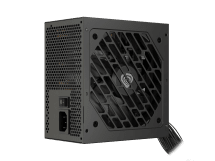





Computer speakers are one of the key components of a setup, whether it is for gaming, listening to music or watching content. The way we perceive sound, and therefore the immersion and comfort of the user, depends on them. Choosing the right set does not just come down to volume. Elements such as channel configuration, the nature of the sound and how the audio signal is processed are also important.
Types of computer and multimedia speakers
Before we move on to slightly more technical issues, it is worthwhile to provide a breakdown of speakers, which is the basis for choosing a set that is in line with expectations. Why? A gamer looking for a compact solution will choose 2.0 speakers or a soundbar, while a cinema-goer will choose a complex 5.1 system to replicate the spatial effects. The obvious statement, then, will be that the choice of speakers always begins with an understanding of their division.
2.0 system
This is a basic system consisting of two stereo speakers. It offers a correct soundstage and is often chosen for office work and everyday use.
Key features:
- no separate subwoofer (bass speaker),
- natural stereo sound reproduction,
- compact design,
- good midrange and treble intelligibility.
2.1 system
Is an extension of the stereo system with a subwoofer responsible for low frequencies. This is the most common type of computer speakers chosen by gamers and multimedia users.
Key features:
- noticeably enhanced bass,
- better reproduction of effects in games and movies,
- separation of the low band from the rest of the range,
- greater dynamic range of sound.
5.1/7.1 system
These are advanced surround systems consisting of five or seven speakers and a subwoofer. They enable precise reproduction of sound directions, thus providing an almost cinematic experience.
Key features:
- full audio spatialization,
- clear channel separation,
- high level of immersion,
- Requires proper placement in the room.
Soundbar
A compact alternative to classic multi-speaker systems. Combines several transducers in a single enclosure, and thanks to its dimensions provides easy placement in the space.
Key features:
- minimalism and space saving,
- simplified installation,
- stereo stage in a single design,
- often supported by virtual surround sound technology.
What is speaker tuning (frequency response)?
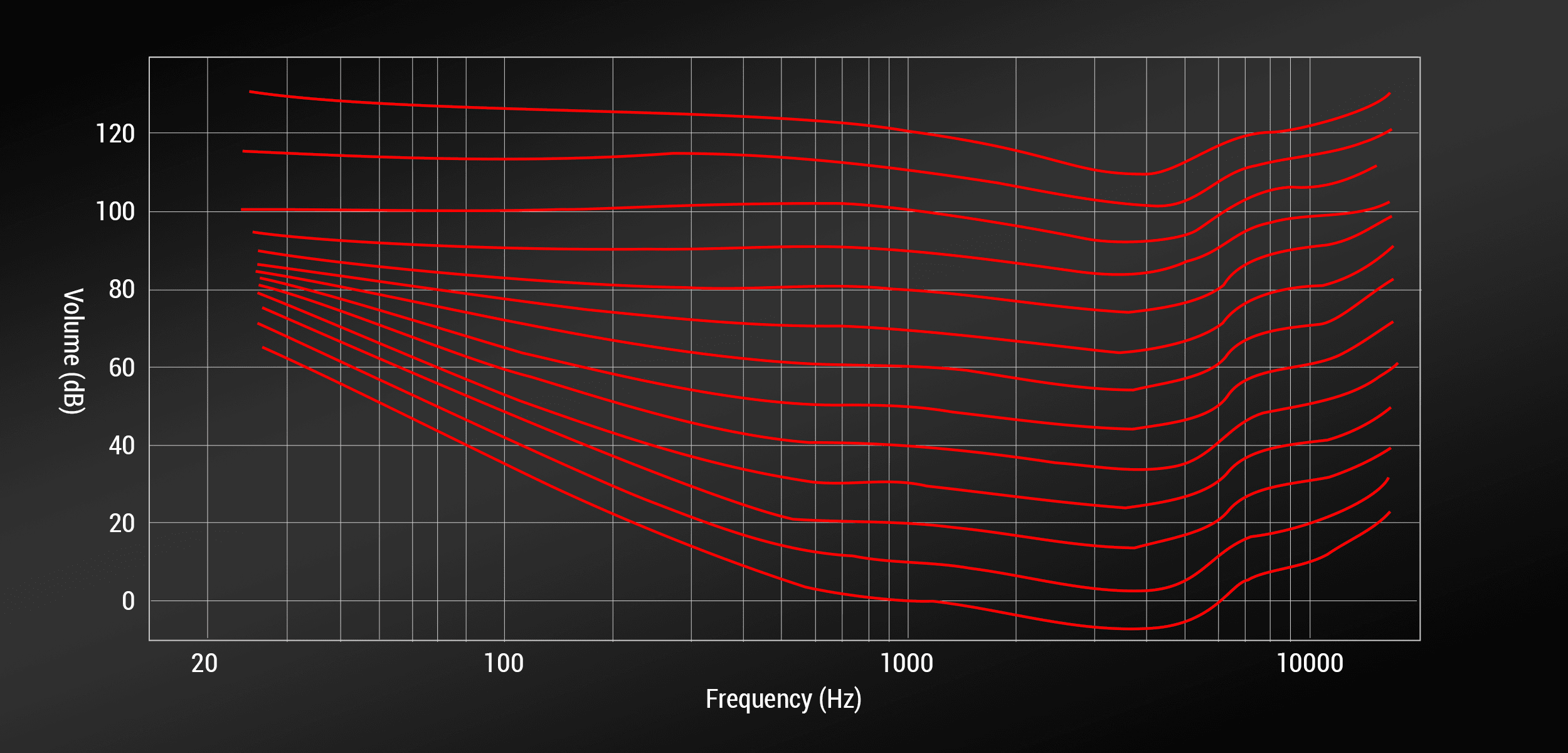
Speaker tuning is a term that appears very often in both promotional materials and equipment descriptions. It is nothing more than the process of shaping their sound characteristics by properly adjusting the operation of the drivers, cabinet and electronics. To understand the term, it is first necessary to understand what the frequency response of a speaker actually is and how the human ear interprets it. The graphic below shows the so-called isophonic curve. People who have had contact with Equalizer will recognize it immediately. Isophony shows the frequency of a sound (usually from 20 to 20,000 Hz) and its loudness (expressed in decibels - dB). Why exactly from 20 to 20,000 Hz? Because it is at this frequency that humans can hear. Not everyone, of course, but this is an averaging that has worked well in the audio world for years. Between 20 and 20,000 Hz we can separate 3 frequencies:
- low (bass) - 20-250 Hz
- middle (mid) - 250-4000 Hz
- treble (treble or high) - above 4,000 Hz
A speaker system without proper tuning will not sound good, and this is where we come to the crux of the issue, because the purpose of speaker tuning is to achieve a certain sound characteristic... about which in the next paragraph.
Sound characteristics
Each speaker system has a certain frequency response (for example, from 40 Hz to 18,000 Hz), but equally important is how the different frequencies are represented in it.
Characteristics can be:
- flat, when the sound is as neutral as possible,
- boosted in the bass, when the low range is dominant,
- emphasized in the treble for greater detail.
What kind of sound you like is entirely up to you and your preferences. The characteristics of the sound and how it is perceived is an individual matter, after all, not everyone likes deep bass or very bright "treble." The safest are neutral speakers, which should reproduce the sound without additional coloration.
What to pay attention to when buying speakers
But coming back to the computer speakers themselves - their choice should take into account not only their type, but also the conditions of use and the expected sound.
Thus, we can distinguish the most important criteria:
- size and acoustic characteristics of the room,
- the purpose of the audio set,
- the presence of a subwoofer,
- the possibility of adjusting the tone of the sound,
- build quality of the cabinet,
- compatibility with computer and mobile devices,
- presence of wireless connectivity.
Technical parameters of speakers
Let's move on to a slightly more technical part of the text, in which I will describe what parameters to pay attention to when choosing speakers to suit you.
RMS power (Root Mean Square).
Determines the real, continuous power of the set. Higher RMS power does not always mean better quality, but it affects the maximum volume without distortion!
Comment for the inquisitive: It is more reliable than peak values.
Frequency response
The range of frequencies that speakers are capable of reproducing. Standard in commercial equipment is in the aforementioned 20 - 20,000 Hz range. Wider bandwidth means a fuller reproduction of the soundstage.
A comment for the curious: bandwidth is defined to the energy drop for cutoff frequencies of -3 dB, -6 dB, etc., which means that the value of the cutoff frequency signal is lower by a certain amount than the rest of the bandwidth.
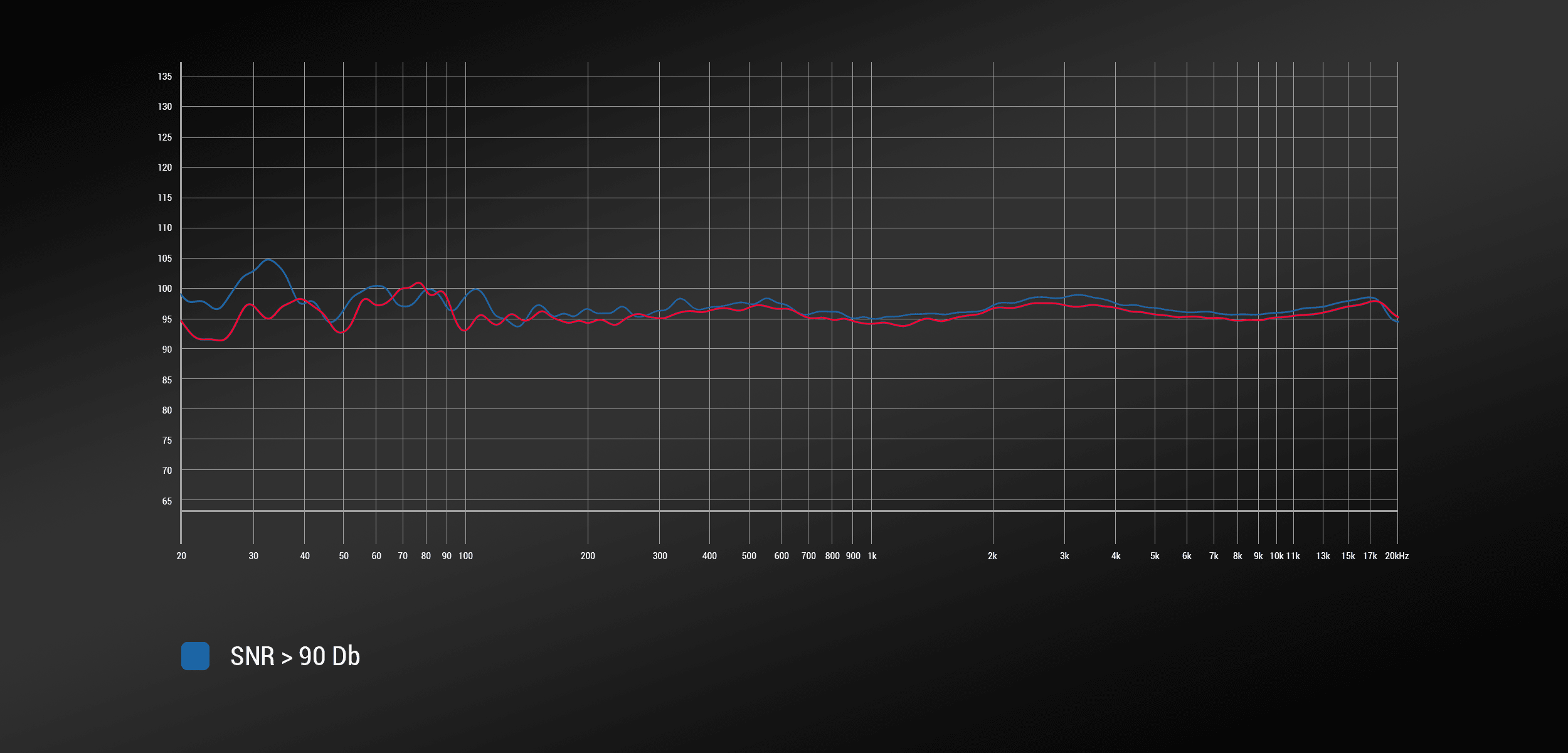
Signal-to-Noise Ratio (SNR).
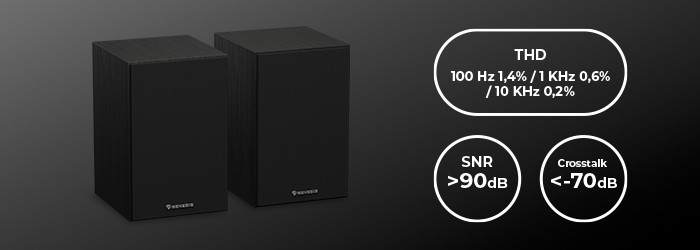
Determines the level of sound clarity through the signal-to-noise ratio. The higher the value, the more detailed we are able to perceive the quieter parts in the material we are listening to. For example, below is the SNR measurement chart of the Arsen 302 BT speakers.
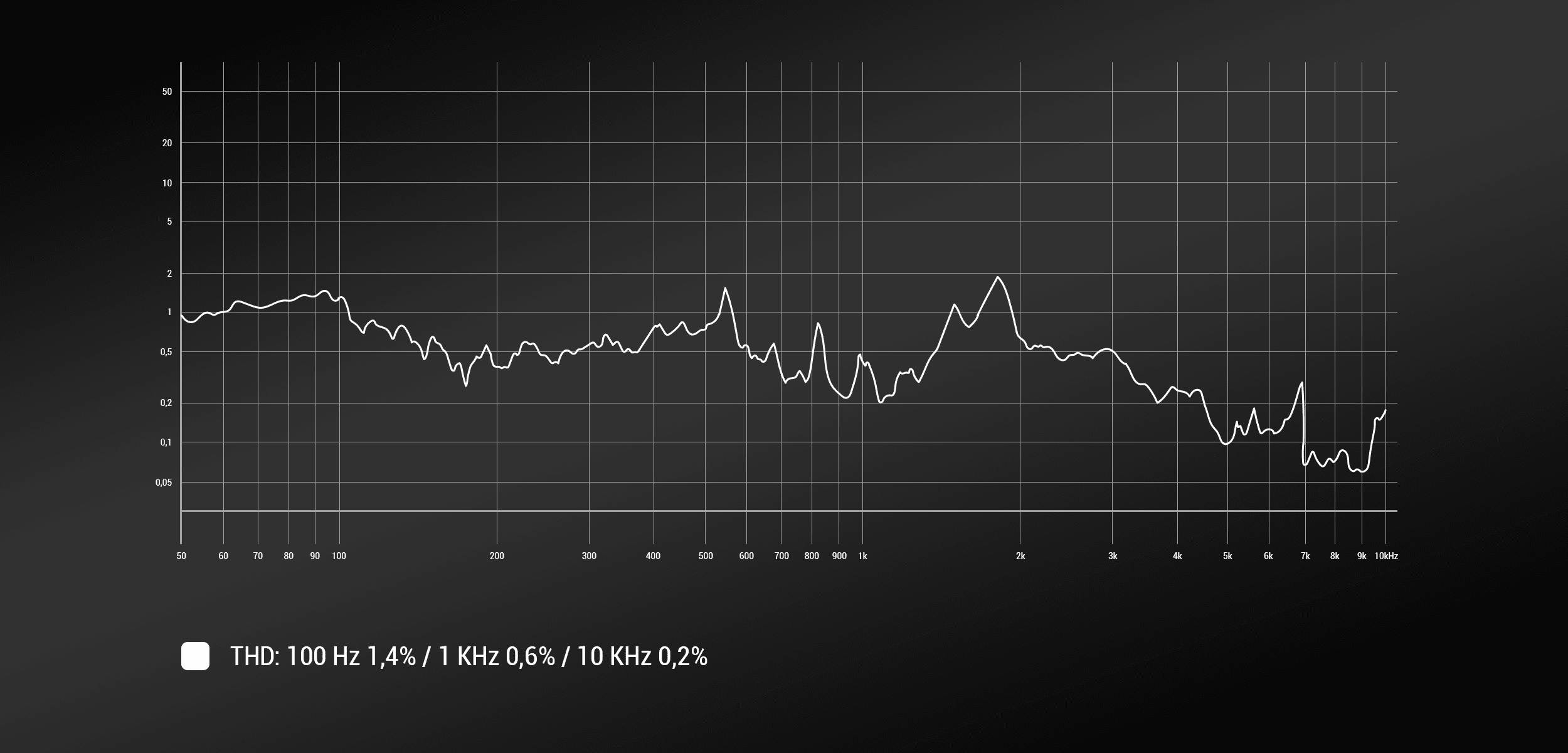
Total Harmonic Distortion (THD).
A parameter that determines the level of distortion of sound at a given volume. Lower values indicate a more faithful sound without distortion. It quantifies how faithfully the equipment reproduces the reproduced material (the lower the value, the better). Another example also comes from the Arsen 302 BT speaker measurement:
Enclosure and design
The type of enclosure affects the character of the bass and its overall dynamics. Closed designs offer more control, while a bass reflex port (a specially selected hole or tube in the speaker cabinet) uses air resonance to shape the lowest frequencies.
Connectivity in audio speakers
The form of connectivity is also important in modern sets:
- Bluetooth for wireless convenience.
- Analog inputs (such as jack, mini-jack, RCA) for classic configurations.
- Digital inputs, such as fiber optic Toslink.
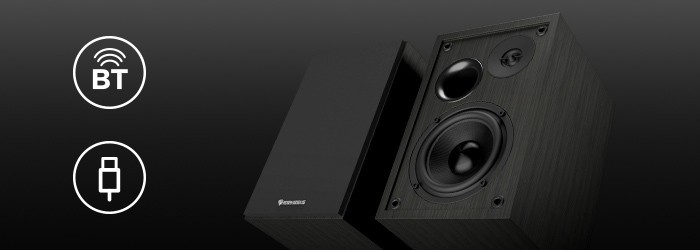
GENESIS Arsen 302BT speakers
Speakers from the new Arsen series - model 302BT- have appeared in our brand's offer. This is a 2.0 set that combines clear, dynamic sound with great flexibility of use thanks to Bluetooth connectivity and classic wired connection. They offer neutral sound with clear treble, clear midrange and strong, controlled bass, which works well for games, movies and listening to music. Their great advantage is the built-in two-band (bass and treble) control, which allows you to adjust the character of the sound to your own preferences, and the compact, modern design with a front bass reflex port makes it easy to position the speakers even in limited desk space without bass reflections.
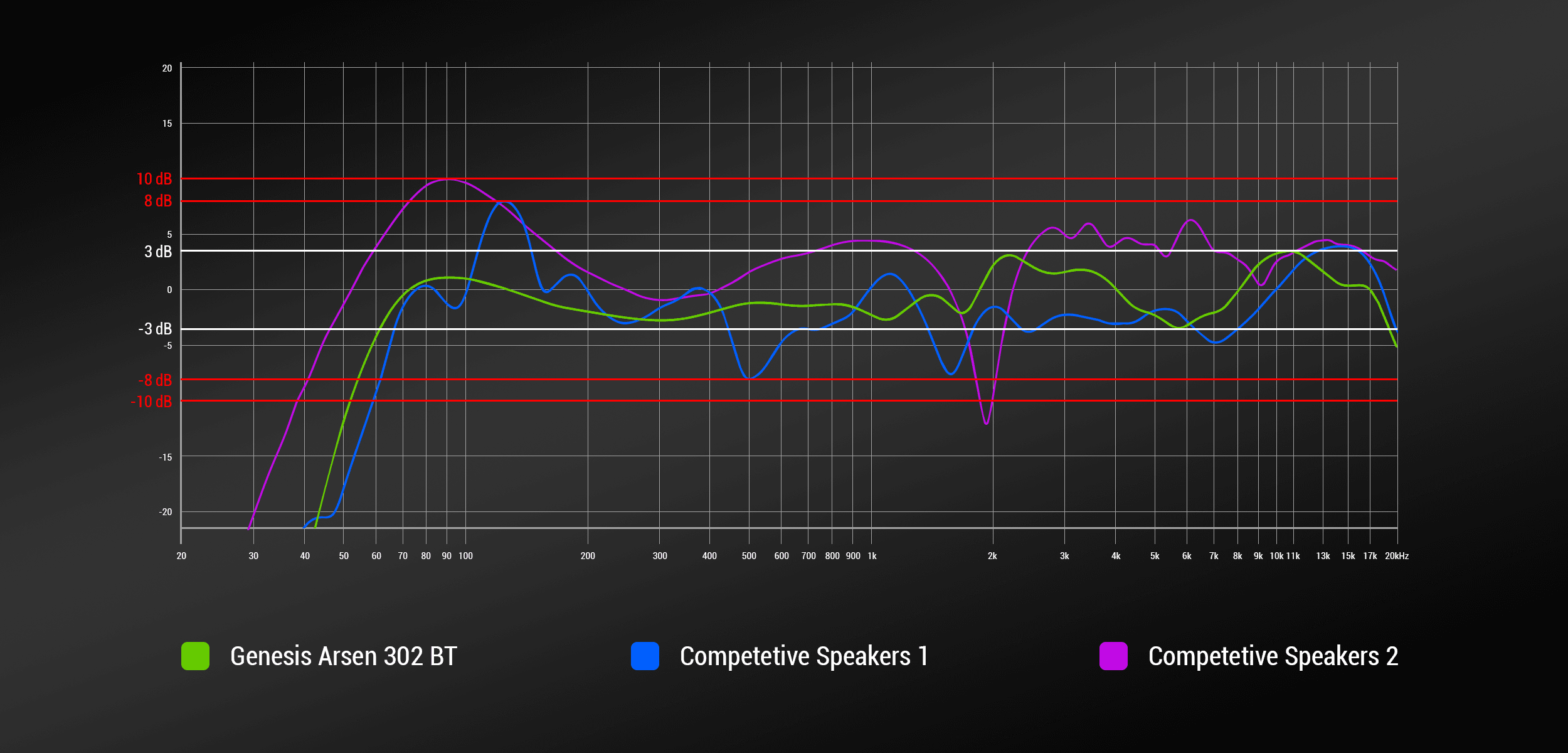
We have also prepared a chart of the sound characteristics of the Arsen 302 BT speakers and popular competitor models:
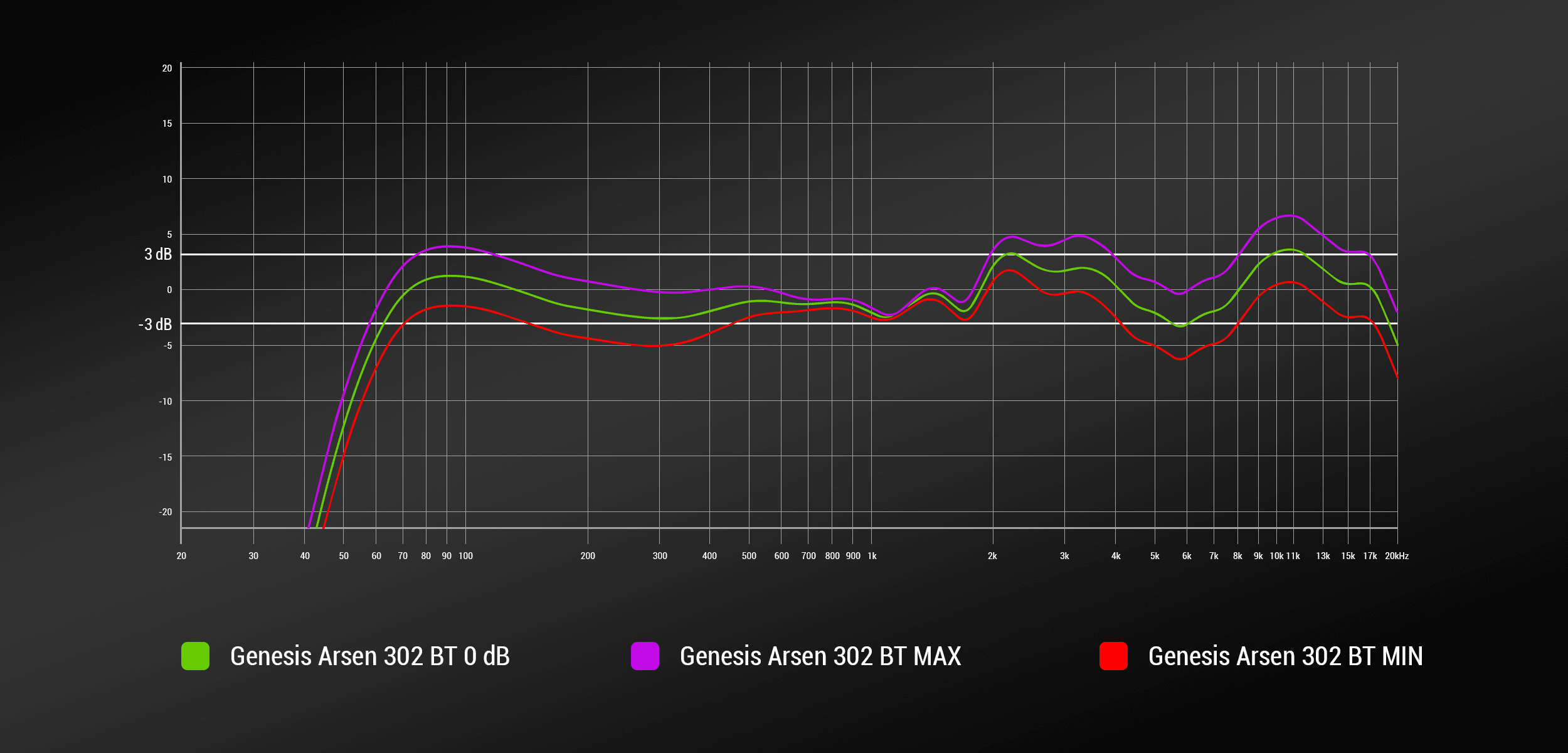
When designing the Arsen 302 BT, we knew it had to have the aforementioned bass (B) and treble (T) correction. Every listening condition is different, and every user is different as well, but it is with active equalization that you can adjust their natural characteristics to your conditions and preferences. Below is a chart discussing equalization:
How to choose computer and multimedia speakers?
I will answer the question from the headline, as is my custom: "it depends." Speakers differ not only in the number of channels, but most importantly in the way they reproduce sound and their tuning. A 2.0/2.1 system will work well for office work, games and multimedia, while a 5.1 system will work well for applications requiring spatiality like watching movies. A soundbar, on the other hand, is a compromise between quality and minimalism.
An informed choice should be based on an understanding of the technical parameters and your own sound preferences, which we strongly encourage you to do. A well-chosen audio system can make a significant difference in the perception of content and the comfort of everyday listening.


